Custom CNC Machined Ceramic Fiber Parts for Furnace Linings
Custom CNC Machined Ceramic Fiber Parts for Furnace Linings
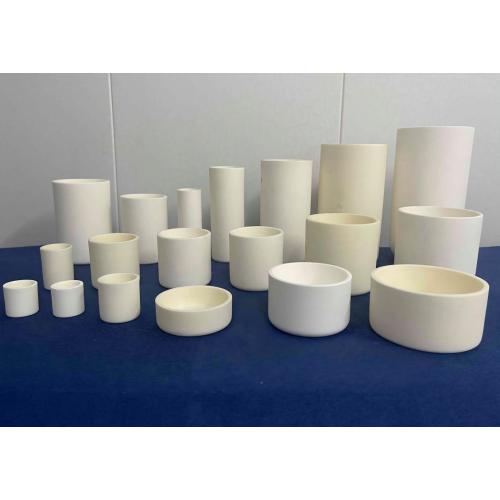
When designing an industrial furnace, standard flat boards can only take the lining design so far. Burner openings, inspection ports, thermocouple passages, and door seals require shaped parts that cannot be produced from a standard rectangular board. This is where custom manufacturing becomes essential for furnace OEMs.
Why Standard Pressed Boards Are Not Enough
Standard ceramic fiber boards are manufactured using a pressing process. This pressing method provides excellent density, uniform thickness, and high mechanical strength, making them ideal for flat furnace walls and hearths. However, when a furnace design requires a complex geometry—such as a circular burner block or a grooved passage—cutting a pressed board on-site creates problems.
On-site cutting generates dust, wastes material, and often results in uneven edges. More importantly, cutting breaks the surface structure of the board, creating microcracks that can propagate under high-temperature thermal cycling. For furnaces operating above 1600°C, these microcracks severely reduce the service life of the lining.
The Solution: Vacuum Forming + CNC Machining
To produce complex shapes that maintain structural integrity, the manufacturing process changes from pressing to vacuum forming. Vacuum forming allows the ceramic fiber slurry to be shaped into complex 3D profiles as a single, seamless piece.
Once the shape is formed and dried, CNC machining is used to achieve the final dimensions. This combination offers distinct advantages for furnace manufacturers:
- ±1mm Tolerance: CNC machining ensures that the custom part fits exactly into the designated opening without gaps. Tight tolerances are critical to prevent hot gas leakage and thermal bridges.
- Seamless Structure: The vacuum-formed part is produced as one piece, eliminating joints that could fail under thermal shock.
- Ready to Install: Parts are delivered ready for assembly. No on-site cutting, trimming, or dust generation.
From Drawing to Finished Part
The process starts with your furnace chamber drawing. We review the dimensions and the operating temperature of the specific zone. For high-temperature hot faces, 1800°C or 1900°C alumina fiber materials are selected, while 1400°C or 1600°C materials may be used for back-up layers or lower-temperature zones.
Whether you need a small batch for a prototype or custom parts for a full production run, we provide flexible supply with a lead time of 15 to 21 days. Send us your drawings, and we will deliver precision-machined components that match your exact specifications.