Sample Order Strategy for Furnace Manufacturers — Why No MOQ Matters for High-Temperature Furnace Lining Development
Sample Order Strategy for Furnace Manufacturers — Why No MOQ Matters for High-Temperature Furnace Lining Development
From design to mass production, a new furnace model passes through a stage that is easily overlooked but critically important: lining material sampling and validation. This stage typically requires very little material — perhaps just a few boards of specific dimensions, or a few custom-shaped parts. Yet those few boards determine whether the entire furnace model can move forward.
The Typical New Product Development Process for Furnace Manufacturers
Design the furnace chamber structure, determine the heating element layout and temperature field distribution; select a lining material solution based on the furnace chamber operating temperature and structure; request a small quantity of material from the supplier for prototype testing; after prototype testing passes, deliver to the customer for validation; after customer validation passes, enter mass production.
In this process, the third and fourth steps are the stages that most require flexible supply. Prototype testing may require only a few boards, and customer validation may require only the material for one prototype furnace. If the supplier requires a pallet or a batch as the minimum order quantity, the furnace manufacturer must either abandon the material solution or carry unnecessary inventory costs.
The Real Impact of MOQ Thresholds on Furnace Manufacturers
Suppose a new furnace model requires three different specifications of lining boards, with only a few boards needed for each specification. A traditional supplier's MOQ might be one pallet (dozens of boards), meaning the furnace manufacturer must purchase more than ten times the required material for each specification. If prototype testing fails or customer validation is not passed, this excess material becomes unusable inventory.
A more common scenario is that during the development stage, a furnace manufacturer needs to test two or three material solutions simultaneously to compare their performance. If each material has an MOQ threshold, the testing cost multiplies, and many promising material solutions may be abandoned at the testing stage.
How No MOQ Matches the Development Rhythm of Furnace Manufacturers
A supply model where even one piece is produced allows furnace manufacturers to order according to actual testing needs. Buy as many as needed, then purchase in bulk after testing passes. This model reduces the trial-and-error cost for furnace manufacturers during new product development and gives suppliers the opportunity to participate in the furnace manufacturer's material solution design at an early stage.
From the supplier's perspective, no MOQ is not a "loss-making business" but an "early engagement strategy." The material solution selected by a furnace manufacturer during the development stage often continues to be used in subsequent mass production. The technical trust built with a small quantity of material early on translates into long-term bulk orders.
The Practical Value of Custom Machining in Sampling
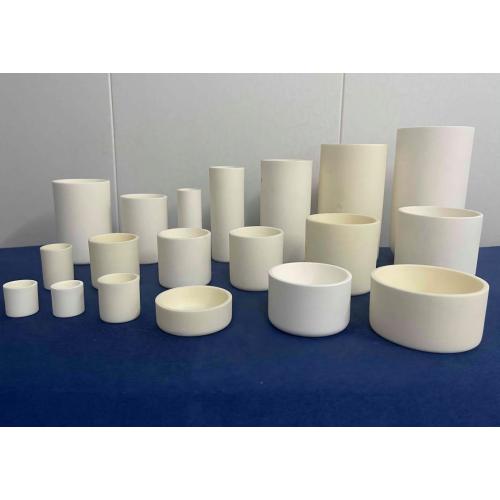
During the sampling stage, furnace manufacturers often need not standard-sized boards but specific dimensions and shapes machined according to furnace chamber drawings. Vacuum forming combined with CNC finishing allows furnace manufacturers to provide drawings directly and receive samples machined to the required dimensions and shapes, without the furnace manufacturer having to do secondary processing.
The value of this process is that the furnace manufacturer can install the sample directly into the prototype for testing, without additional cutting and trimming operations. The test results are closer to actual service conditions, and the validation data is more valuable as a reference.
The Impact of Lead Time on Sampling Rhythm
Furnace manufacturers' product development typically has clear time milestones. Prototype testing, customer validation, and mass production launch — each stage has a planned timeline. Material lead time directly affects the entire development schedule. A lead time of 15–21 days is competitive for custom-machined products, allowing furnace manufacturers to reserve reasonable material procurement time in their development plans without delaying the entire project while waiting for materials.
Conclusion
When developing new furnace models, lining material sampling and validation is a stage that requires flexible supply. No MOQ, custom machining, and reasonable lead time — these three elements together determine whether a supplier can match the development rhythm of a furnace manufacturer. For furnace manufacturers, choosing a supplier that can flexibly cooperate during the development stage has greater long-term value than choosing the supplier with the lowest price at the mass production stage.